
Legal Standard For Schools To Search Students Reasonable Suspicion Vs. Probable Cause
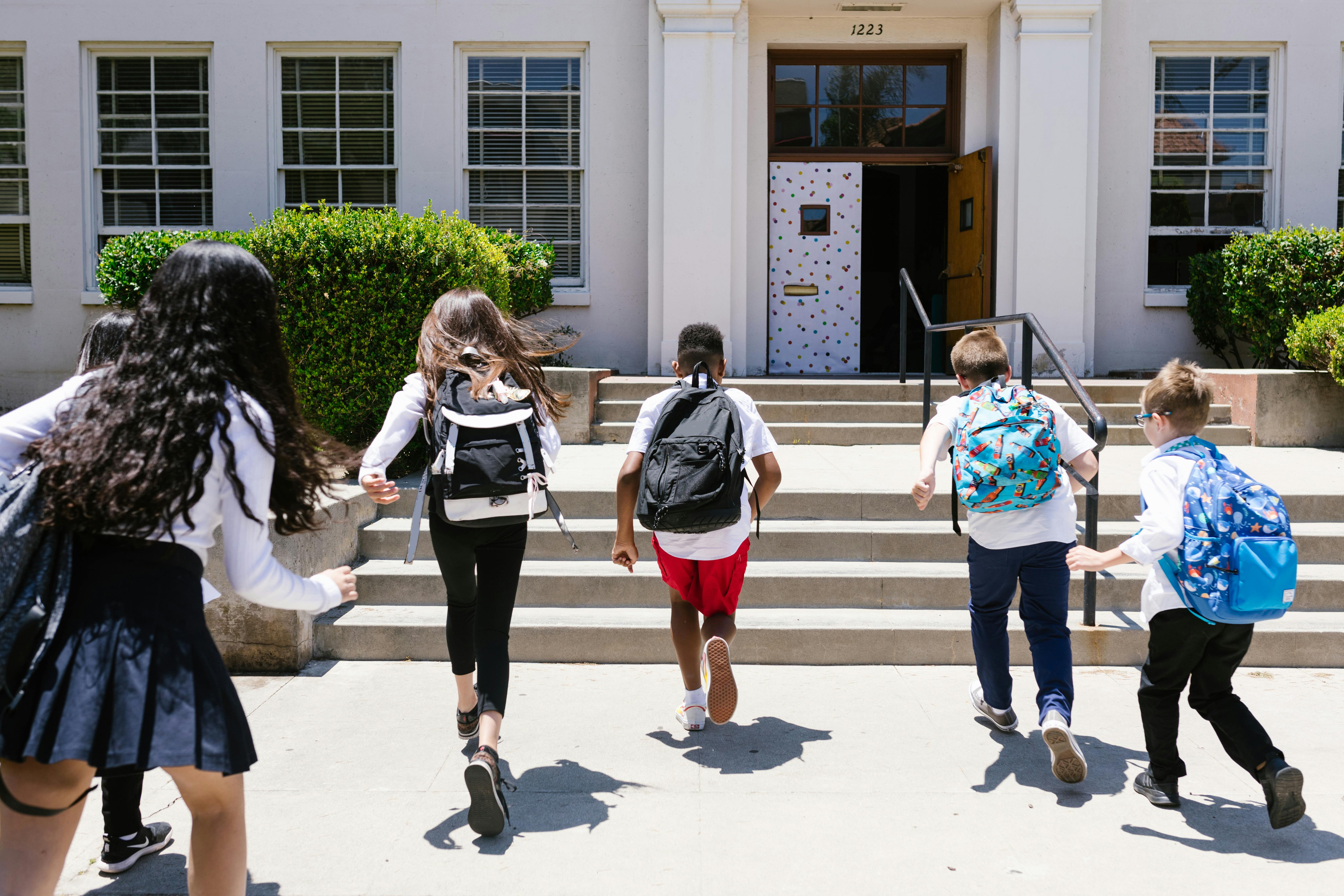 Reasonable Suspicion vs. Probable Cause in School Searches
Students do not lose their Fourth Amendment rights simply because they enter a public school. However, the constitutional rules governing searches in schools are different from the rules that generally apply to searches conducted by law enforcement outside the school setting. The United States Supreme Court has recognized that schools have an important responsibility to maintain safety, order, and an environment where students can learn. As a result, school officials generally do not have to meet the same probable-cause and warrant requirements that police officers ordinarily face when conducting a criminal investigation.
Quick Take: The Fourth Amendment applies to public-school students, but the Supreme Court has established a school-specific reasonableness standard. Under New Jersey v. T.L.O., a search by a school official ordinarily must be justified by reasonable grounds for suspecting that the search will uncover evidence that a student violated the law or a school rule, and the search must be reasonably related in scope to the circumstances that justified it.
Students Have Fourth Amendment Rights in Public Schools
The original argument that students “lack 4th Amendment rights” in schools is not accurate. In New Jersey v. T.L.O., 469 U.S. 325 (1985), the Supreme Court expressly held that the Fourth Amendment applies to searches conducted by public school officials. The Court recognized that students have legitimate expectations of privacy in their personal belongings even though the school environment requires some modification of the ordinary rules governing searches.
The Court nevertheless concluded that school officials generally do not need to obtain a warrant before searching a student. The Court also rejected the idea that every school search must be supported by probable cause. Instead, the legality of a school search generally depends on whether the search was reasonable under all of the circumstances.
Public-School Students Still Have Constitutional Privacy Protections
The Fourth Amendment protects students from unreasonable searches and seizures. What changes in the school environment is the constitutional standard used to determine whether a particular search is reasonable. The school context can justify searches that would require a greater level of justification in an ordinary law-enforcement setting.
Reasonable Suspicion vs. Probable Cause
Reasonable Suspicion
Reasonable suspicion requires specific circumstances or facts that support a reasonable belief that a violation may have occurred or that evidence of a violation may be found. It is more than an unsupported hunch, but it is a lower standard than probable cause.
Probable Cause
Probable cause generally requires a stronger factual basis. In the ordinary criminal-law context, it is commonly required for actions such as obtaining a search warrant and making many arrests or searches. It requires facts and circumstances supporting a fair probability that evidence of a crime will be found or that a crime has been committed.
The distinction matters because the Supreme Court has specifically recognized that requiring school officials to satisfy the ordinary probable-cause and warrant requirements could interfere with the school’s ability to respond quickly to disciplinary and safety concerns. In T.L.O., the Court explained that the warrant requirement is generally unsuited to the school environment because school officials must be able to address suspected violations through swift and informal disciplinary procedures.
How the School Search Standard Works
Under T.L.O., a school search generally involves two related questions. First, there must be a reasonable basis for conducting the search in the first place. Second, the search cannot be broader or more intrusive than is reasonably related to the circumstances that justified it.
A reason must exist for the search.
The school official generally must have reasonable grounds for suspecting that the search will uncover evidence that a student violated the law or a school rule.
The search must relate to the suspected violation.
A search should be connected to the circumstances that created the suspicion rather than being unnecessarily broad.
The scope of the search matters.
Even when a search begins lawfully, the way it is conducted must remain reasonably related to its objective and cannot be excessively intrusive in light of the circumstances.
Why Schools Use a Lower Standard Than Probable Cause
One argument in favor of the reasonable-suspicion standard is that school officials often need to respond quickly to situations involving student safety, school discipline, drugs, weapons, or other violations. Requiring a school administrator to obtain a judicial warrant before addressing every suspected violation could make it difficult for the school to respond to developing situations.
The Supreme Court’s decision in T.L.O. specifically recognized this practical concern. The Court explained that the school setting requires some easing of the restrictions that ordinarily apply to government searches because schools have responsibility for maintaining an orderly environment for children.
The important distinction: A lower standard does not mean that school officials can search students whenever they want. The Fourth Amendment still requires reasonableness, and the circumstances surrounding the search matter.
For example, a school official who has specific information that a student possesses prohibited drugs may have a different constitutional basis for searching that student’s belongings than an official who has nothing more than a generalized feeling that the student may be involved in misconduct.
Are Random Searches Allowed?
Random or suspicionless searches raise a different constitutional question. The fact that reasonable suspicion is generally sufficient for an individualized school search does not mean that every suspicionless search is automatically unconstitutional. The Supreme Court has recognized limited circumstances in which a school may conduct certain suspicionless searches or testing programs when the policy is considered reasonable under the Fourth Amendment.
Vernonia School District v. Acton
In 1995, the Supreme Court upheld a suspicionless drug-testing policy for student athletes under the specific circumstances presented in that case. The Court considered the students’ privacy interests, the nature of the intrusion, and the school’s interests in addressing drug use.
Board of Education v. Earls
In 2002, the Supreme Court upheld a policy requiring students participating in certain extracurricular activities to consent to random drug testing. Again, the Court analyzed the reasonableness of the particular policy rather than adopting a blanket rule that all suspicionless searches are permissible.
These cases demonstrate why the phrase “random search” needs to be examined carefully. A particular search policy may be subject to a fact-specific constitutional analysis involving the purpose of the search, the degree of intrusion, the students affected, and the school’s governmental interests.
Concerns About Extensive School Security Measures
There is also an important policy discussion surrounding extensive searches, surveillance, and other security measures in public schools. Legal scholars have examined whether aggressive security practices can affect students’ experiences at school, their perceptions of constitutional rights, and their relationship with school authorities.
Jason P. Nance’s research has examined random, suspicionless searches of students’ belongings and school security practices. His 2013 article in the University of Colorado Law Review discussed constitutional concerns surrounding suspicionless searches and presented empirical findings concerning the use of intensive security measures in schools. Nance argued that some intrusive search practices should require particularized, objective evidence of a weapons or substance-abuse problem.
These are scholarly arguments and empirical findings rather than a rule adopted by the Supreme Court. The constitutional standard remains governed by Supreme Court precedent, including T.L.O., Vernonia, and Earls.
Why this matters: The debate over school searches involves two interests that courts must consider together: students’ privacy and constitutional rights on one side, and schools’ responsibility to maintain safety and an environment conducive to learning on the other.
Reasonable Suspicion Does Not Mean Unlimited Search Authority
It is important not to confuse the reasonable-suspicion standard with unrestricted authority to search students. A school official’s personal belief, standing alone, does not automatically make a search constitutional. The circumstances should provide a reasonable basis for suspecting that the search will uncover evidence of a violation.
The scope of the search is also important. A search that begins with reasonable grounds can still become unreasonable if it goes substantially beyond what the circumstances justify. Courts therefore look at the relationship between the suspected violation, the purpose of the search, and the manner and extent of the search.
This distinction can be especially important when a student is searched because of suspected possession of drugs, weapons, stolen property, or other prohibited items. The facts known to school officials before the search, what was observed during the search, and how far the search went may all become important when evaluating whether the Fourth Amendment was satisfied.
What Students and Parents Should Know
Do students have Fourth Amendment rights at school?
Yes. The Supreme Court held in New Jersey v. T.L.O. that the Fourth Amendment applies to searches conducted by public school officials. Students retain constitutional privacy protections, although the school environment changes the standard used to determine whether a search is reasonable.
Does a school official need probable cause to search a student?
Generally, no. Under T.L.O., a school search ordinarily does not require probable cause. Instead, the search generally must be justified by reasonable grounds for suspecting that it will uncover evidence that the student violated the law or school rules, and the search must be reasonable in scope.
Can schools conduct searches without individualized suspicion?
Sometimes. The Supreme Court has upheld certain suspicionless drug-testing programs in public schools, including the policies considered in Vernonia School District v. Acton and Board of Education v. Earls. Those decisions involved fact-specific analyses of whether the particular programs were reasonable under the Fourth Amendment.
What makes a school search potentially unreasonable?
The answer depends on the circumstances. Issues can include whether school officials had a reasonable basis for initiating the search, what they were looking for, how intrusive the search was, and whether the scope of the search was reasonably related to the circumstances that justified it.
Sources and Illinois Resources
New Jersey v. T.L.O., 469 U.S. 325 (1985)
Read the Supreme Court decision
Vernonia School District 47J v. Acton, 515 U.S. 646 (1995)
Read the Supreme Court decision
Board of Education of Independent School District No. 92 v. Earls, 536 U.S. 822 (2002)
Read the Supreme Court decision
U.S. Constitution Annotated — School Searches
Fourth Amendment school-search overview
Jason P. Nance — Random, Suspicionless Searches of Students’ Belongings
University of Colorado Law Review article
Fourth Amendment — Legal Information Institute
Fourth Amendment overview
Questions About Criminal Defense or Constitutional Rights?
If you or your child is facing a criminal investigation, school-related search, or other legal issue involving constitutional rights, speaking with an experienced attorney can help you understand your legal options.
