
Judge Places Restraining Order on HB 5471 Involving Traveling with Weapons
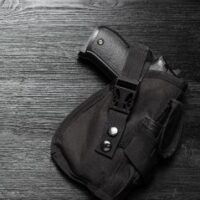
Illinois Assault Weapons Law: What HB 5471 Means and What the Courts Have Decided
Illinois enacted the Protect Illinois Communities Act in 2023, and federal courts have since considered whether its restrictions on assault weapons, large-capacity magazines, and related items comply with the Second Amendment.
House Bill 5471 became the Protect Illinois Communities Act when Governor J.B. Pritzker signed Public Act 102-1116 on January 10, 2023. The law regulates the manufacture, sale, delivery, importation, purchase, and possession of defined assault weapons, assault weapon attachments, .50 caliber rifles and cartridges, and large-capacity ammunition feeding devices. The law also created a grandfather provision allowing qualifying individuals who lawfully possessed certain restricted items before the law took effect to continue possessing them after completing the required endorsement process.
Important Update: Early lawsuits challenged the law shortly after it took effect. The litigation later proceeded through the Seventh Circuit Court of Appeals and ultimately reached the Illinois Supreme Court’s federal counterpart, the United States Supreme Court. In July 2026, the Seventh Circuit reversed a Southern District of Illinois judgment that had permanently enjoined the law and directed the district court to enter judgment for the State defendants.
What Is HB 5471?
HB 5471 was the bill that became Public Act 102-1116, commonly known as the Protect Illinois Communities Act. The legislation amended Illinois firearms laws and created new restrictions involving certain semiautomatic firearms, firearm attachments, .50 caliber rifles and cartridges, and large-capacity ammunition feeding devices.
The law is now codified in part at 720 ILCS 5/24-1.9 and 720 ILCS 5/24-1.10.
Assault Weapons
The law defines certain semiautomatic rifles, pistols, shotguns, and specifically listed models as assault weapons.
Large-Capacity Magazines
The law restricts ammunition feeding devices holding more than 10 rounds for rifles and shotguns and more than 15 rounds for handguns.
.50 Caliber Firearms
Certain .50 caliber rifles and .50 caliber cartridges are also covered by the statute.
Assault Weapon Attachments
The Act also regulates certain attachments or devices designed to make or convert a firearm into an assault weapon.
Does Illinois Law Prohibit Possession?
Yes. This is an important correction to older descriptions of the law.
Section 24-1.9 originally prohibited the knowing manufacture, delivery, sale, importation, and purchase of covered assault weapons and other regulated items beginning January 10, 2023. Beginning January 1, 2024, the law also made knowing possession unlawful, subject to statutory exceptions and the grandfather provision for qualifying prior owners.
The Law Changed in Stages
January 10, 2023: Restrictions on the manufacture, delivery, sale, importation, and purchase of covered weapons and related items took effect.
January 1, 2024: The possession restrictions took effect, subject to grandfather and other statutory exceptions.
What Is an Assault Weapon Under Illinois Law?
Illinois law uses a detailed statutory definition rather than simply identifying firearms by whether they are semiautomatic.
For example, section 24-1.9 includes certain semiautomatic rifles that can accept detachable magazines and have specified features such as a pistol grip, protruding non-trigger-hand grip, folding or telescoping stock, flash suppressor, grenade launcher, or barrel shroud.
The statute also specifically lists various makes and models. The definition includes AR-type rifles, including the AR-15, as well as numerous other firearms.
The Definition Is More Detailed Than a Brand List
Whether a particular firearm is covered can depend on the firearm’s model, characteristics, magazine capacity, attachments, and the specific language of section 24-1.9. A person should not assume that a firearm is or is not covered solely because of its general appearance or brand name.
Is Illinois Limited to a 10-Round Maximum for All Rifles?
Not exactly. The original article’s statement that Illinois limits “any rifle” to a maximum 10-round capacity is too broad.
Section 24-1.10 defines a restricted large-capacity ammunition feeding device as one capable of holding more than 10 rounds for a rifle or shotgun or more than 15 rounds for a handgun, subject to the statutory exceptions.
More than 10 rounds is generally within the definition of a large-capacity ammunition feeding device.
More than 10 rounds is generally within the statutory definition.
More than 15 rounds is generally within the statutory definition.
What Happens to People Who Already Owned a Covered Firearm?
Illinois created a grandfather provision for qualifying people who lawfully possessed covered assault weapons, assault weapon attachments, .50 caliber rifles, or .50 caliber cartridges before the law took effect.
The statute required qualifying owners to submit an endorsement affidavit to the Illinois State Police. The affidavit includes identifying information and information concerning the firearm or other regulated item. The statute provides that a properly completed endorsement affidavit creates a rebuttable presumption that the person is entitled to possess and transport the covered item.
The Grandfather Provision Is Limited
The grandfather provision does not simply allow unrestricted possession and transfer. The statute imposes conditions on where qualifying owners may possess and transport covered items and limits the persons or entities to whom the items may be transferred.
Why Did Gun Rights Groups Challenge the Law?
Shortly after the Protect Illinois Communities Act took effect, individuals, firearm businesses, and organizations filed multiple federal lawsuits challenging the law. The plaintiffs asserted Second Amendment claims concerning the restrictions on assault weapons and large-capacity magazines and raised additional constitutional arguments in the various cases.
One of the Southern District of Illinois cases was Harrel v. Raoul. Other consolidated cases included Barnett v. Raoul, Langley v. Kelly, and Federal Firearms Licensees of Illinois v. Pritzker.
Second Amendment
Plaintiffs argued that the restrictions violated the constitutional right to keep and bear arms.
Registration
Plaintiffs also challenged the requirement for qualifying owners to submit an endorsement affidavit.
Other Constitutional Claims
Different plaintiffs and cases raised additional constitutional theories, but the later Seventh Circuit decision centered primarily on the Second Amendment and registration issues.
What Happened to the First Federal Injunction?
A Southern District of Illinois judge initially granted preliminary relief against enforcement of the law in 2023. Other federal judges considering similar challenges reached different conclusions.
The Seventh Circuit consolidated the appeals and decided Bevis v. City of Naperville in November 2023. The court concluded that the plaintiffs were unlikely to succeed on their Second Amendment challenges and vacated the preliminary injunctions that had been entered in the Southern District cases.
The United States Supreme Court later denied petitions for certiorari in July 2024.
The Litigation Did Not End There
The Seventh Circuit’s 2023 decision addressed preliminary relief. The parties then developed a more complete factual record, leading to a later bench trial in the Southern District of Illinois.
What Did the Southern District of Illinois Decide After Trial?
After a bench trial, the Southern District of Illinois found in favor of the plaintiffs and held that significant portions of the Protect Illinois Communities Act violated the Second Amendment. The court entered a permanent injunction against enforcement of the challenged provisions, including the assault weapons and large-capacity magazine restrictions and the associated endorsement requirements.
The State defendants appealed that decision to the Seventh Circuit.
Another Appeal Followed
The 2024 district court judgment was not the final word. The Seventh Circuit accepted the State’s appeal and issued a new decision on July 9, 2026.
What Did the Seventh Circuit Decide in 2026?
On July 9, 2026, the United States Court of Appeals for the Seventh Circuit reversed the Southern District of Illinois’ judgment in the consolidated cases of Barnett v. Raoul, Harrel v. Raoul, Langley v. Kelly, and Federal Firearms Licensees of Illinois v. Pritzker.
The Seventh Circuit held that Illinois’ restrictions on AR-15 rifles and 30-round rifle magazines were consistent with the nation’s historical tradition of firearm regulation. The court also upheld the constitutionality of the endorsement affidavit requirement for qualifying grandfathered owners.
The appellate court directed the district court to enter judgments for the State defendants.
The 2026 decision focused on the Act’s application to AR-15 rifles and thirty-round rifle magazines as representative regulated items. The majority concluded that the restrictions fit within the nation’s historical tradition of regulating particularly dangerous weapons.
Chief Judge Brennan dissented. The dissent argued that AR-15 rifles and thirty-round magazines are protected because they are commonly owned for lawful purposes and that the majority’s historical analysis was inconsistent with the Supreme Court’s Second Amendment precedent.
What the 2026 Decision Means
The Seventh Circuit’s decision is now the controlling appellate decision within the federal circuit unless it is later modified, reversed, or superseded. It reversed the Southern District of Illinois’ permanent injunction rather than leaving that injunction in place.
What About the Fifth Amendment Argument?
The original version of this article described the endorsement requirement as an apparent violation of the Fifth Amendment privilege against self-incrimination. That description should be treated carefully.
The later Seventh Circuit litigation did not adopt that characterization. In the 2026 consolidated appeal, the court addressed the constitutionality of the endorsement affidavit and upheld the registration requirement. The court described the affidavit process as free, ministerial, and not dependent on government discretion.
Registration Was Specifically Upheld
The Seventh Circuit concluded that the endorsement affidavit requirement was constitutional and compared it to a shall-issue licensing regime. The court therefore rejected the challenge to the registration requirement presented in the consolidated appeal.
Does the Current Case Decide Every Constitutional Question About the Law?
No. The scope of a court’s ruling matters. The July 2026 Seventh Circuit opinion principally addressed the Second Amendment challenge to the Act’s restrictions and the endorsement affidavit requirement.
The opinion did not issue a broad, standalone ruling that every possible constitutional theory involving the Act has been resolved under all circumstances. As with other constitutional litigation, an as-applied challenge can present different facts and legal questions from a facial challenge.
The Seventh Circuit itself noted that the consolidated plaintiffs had not addressed every possible application of the challenged provisions and held that the record supported the Act’s constitutionality as to the representative weapons and magazines before the court.
What Does the Second Amendment Have to Do With the Case?
The Second Amendment provides that the right of the people to keep and bear arms shall not be infringed. Modern Second Amendment cases require courts to evaluate firearm regulations under the historical framework established by the United States Supreme Court.
In New York State Rifle & Pistol Association v. Bruen, the Supreme Court explained that when the Second Amendment’s text covers an individual’s conduct, the government must justify the regulation by showing that it is consistent with the nation’s historical tradition of firearm regulation.
Applying that framework, the Seventh Circuit concluded in Bevis and again in the 2026 Barnett decision that Illinois’ restrictions on the weapons and magazines at issue were consistent with that historical tradition.
Constitutional Text
The court asks whether the challenged conduct falls within the Second Amendment’s protection.
Historical Tradition
The government must identify historical principles supporting the challenged regulation under the applicable Supreme Court framework.
Application to the Law
The court then evaluates whether the particular Illinois restriction fits within the relevant constitutional tradition.
What Happens to a Person Who Violates Illinois’ Assault Weapons Law?
Violations of section 24-1.9 can result in criminal penalties under Illinois law. The potential charge depends on the prohibited conduct and the particular statutory provision involved.
Because the statute regulates several different categories of conduct—including possession, manufacture, delivery, sale, importation, and purchase—a person facing an allegation should have the specific subsection identified rather than relying on a general description of the law.
The Exact Conduct Matters
What Does This Mean for Illinois Firearm Owners?
The current Illinois statute remains in effect, including its restrictions on covered assault weapons, large-capacity ammunition feeding devices, .50 caliber rifles and cartridges, and assault weapon attachments, subject to the law’s stated exceptions and grandfather provisions.
The July 2026 Seventh Circuit decision is particularly important because it reversed the Southern District of Illinois’ permanent injunction and directed judgment for the State defendants. The court specifically upheld the challenged restrictions involving AR-15 rifles and thirty-round rifle magazines and upheld the endorsement affidavit requirement.
The Litigation Has Evolved
An article describing only the 2023 temporary restraining order or preliminary injunction no longer accurately describes the current legal posture. The litigation produced conflicting district court rulings, an earlier Seventh Circuit decision, a Supreme Court denial of certiorari, a later permanent injunction, and ultimately a July 2026 Seventh Circuit decision reversing that injunction.
What Should You Do If You Are Charged Under Illinois’ Assault Weapons Law?
A firearm case involving the Protect Illinois Communities Act can depend on the exact firearm involved, its features and capacity, when it was acquired, whether a grandfather provision applies, what conduct the State alleges, and which statutory subsection is charged.
Because the law has changed over time and the federal litigation has produced multiple decisions, a person facing charges should have the current statute and the facts of the individual case reviewed carefully.
Identify the Firearm
Determine whether the specific firearm is covered by the statutory definition.
Review the Date
Acquisition date can be important when determining whether grandfather provisions apply.
Identify the Alleged Violation
Different subsections apply to possession, purchase, sale, delivery, importation, and other conduct.
Talk to an Illinois Criminal Defense Lawyer
Illinois firearms laws are detailed and have changed significantly since HB 5471 became law. Federal constitutional challenges have also produced multiple court decisions that affect the legal landscape.
Patel Law, PC represents people facing serious weapons and firearm charges in Illinois. Our Champaign criminal lawyers can review the specific firearm involved, the charges being alleged, and the applicable Illinois law.
Facing an Illinois Firearm Charge?
Talk with a Champaign criminal defense lawyer about your charges and legal options.
Sources
- 720 ILCS 5/24-1.9 — Assault Weapons, .50 Caliber Rifles and Cartridges
- 720 ILCS 5/24-1.10 — Large-Capacity Ammunition Feeding Devices
- Barnett v. Raoul, Nos. 24-3060 et al. — Seventh Circuit, July 9, 2026
- Bevis v. City of Naperville, 85 F.4th 1175 — Seventh Circuit, November 3, 2023
- Harrel v. Raoul — United States Supreme Court docket
- Original Interlocutory Appeal Notice
