
Legislation To Stop Ice Agents From Making Arrests At Courthouses
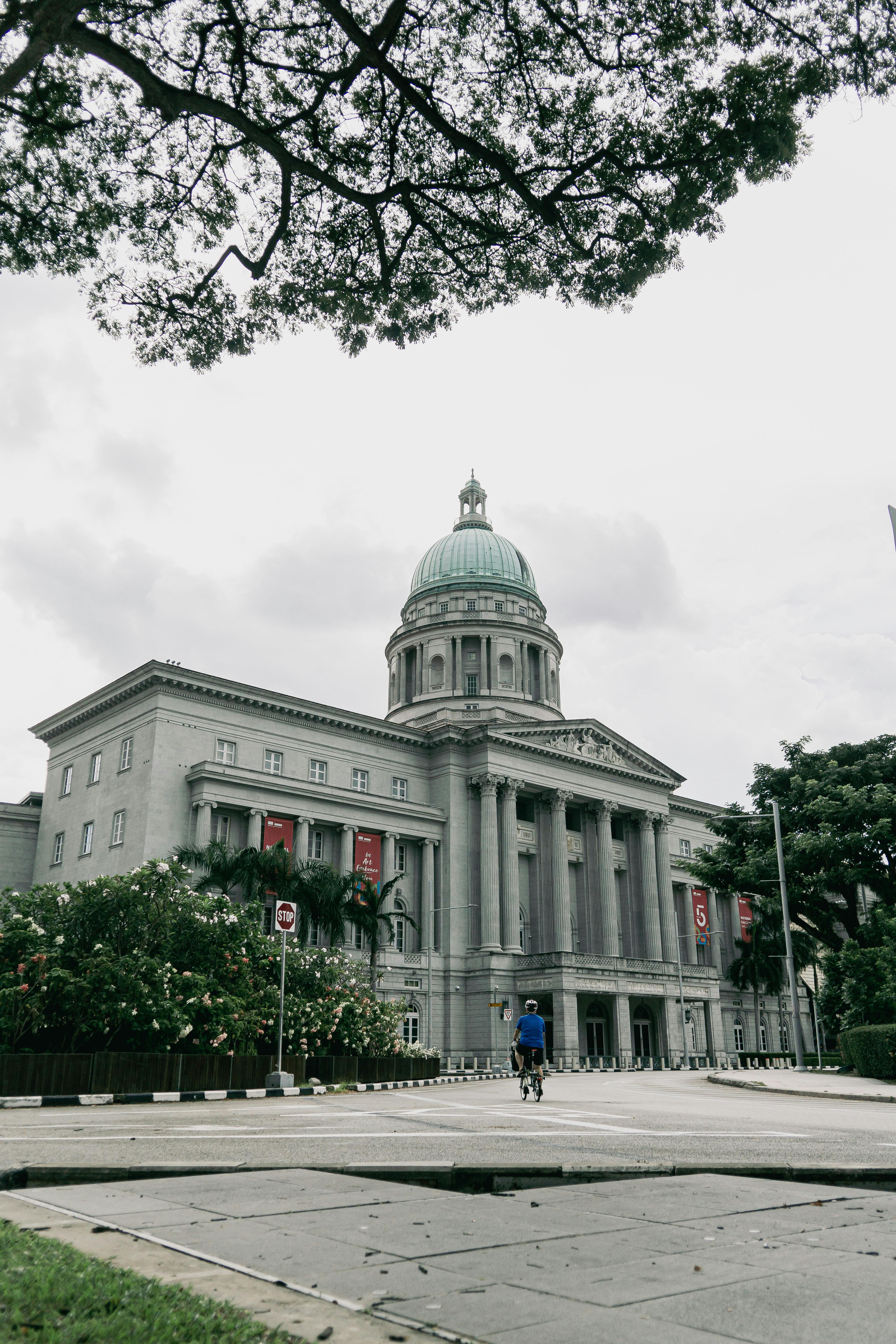 How courthouse immigration arrests raised questions about access to justice, sensitive locations, and immigration enforcement
In 2017, arrests by U.S. Immigration and Customs Enforcement (ICE) at and around courthouses received significant attention from attorneys, judges, prosecutors, local officials, and immigration advocates. Reports from several states described ICE agents making arrests of individuals who were present at courthouses for criminal proceedings, protective orders, or other legal matters.
The issue raised an important legal and practical question: should a courthouse be treated as a location where immigration enforcement actions are restricted so that people can safely participate in the judicial system? At the time, ICE’s sensitive-locations policy generally identified places such as schools, hospitals, and places of worship, but courthouses were not expressly included in the policy.
In response to concerns about courthouse arrests, members of Congress introduced the Protecting Sensitive Locations Act in 2017. The legislation was introduced as H.R. 1815 in the House of Representatives and S. 845 in the Senate. Neither bill became law.
Quick Take: The Protecting Sensitive Locations Act was a 2017 legislative proposal, not an enacted federal law. H.R. 1815 would have restricted certain immigration-enforcement actions at, focused on, or occurring within 1,000 feet of designated sensitive locations unless exigent circumstances existed or prior approval was obtained. The proposal specifically included federal, state, and local courthouses, legal counsel offices, and probation offices in its definition of sensitive locations.
Why ICE Courthouse Arrests Became a National Issue
Courthouses are places where people may be required to appear as defendants, witnesses, victims, family members, attorneys, or participants in civil proceedings. In 2017, reports of ICE agents appearing at courthouses to make immigration arrests generated concern that some people might avoid appearing in court because they feared being detained.
In California, for example, the Los Angeles Times reported in March 2017 that ICE agents had made arrests in or around courthouses in California, Arizona, Texas, and Colorado. The article described concerns from attorneys and prosecutors that courthouse enforcement could discourage immigrants from appearing in court, including people who might otherwise serve as witnesses or seek protection through the legal system.
ICE defended the practice at the time and stated that agents generally attempted to make arrests at other locations when possible. ICE officials also explained that courthouse arrests could provide tactical advantages because individuals entering courthouses generally pass through security screening.
The legal issue involved competing interests.
Federal immigration authorities have statutory authority to enforce federal immigration laws. At the same time, state and local courts have an interest in ensuring that victims, witnesses, defendants, attorneys, and other participants can appear in court without unnecessary interference with judicial proceedings.
What Does “Sensitive Location” Mean?
ICE’s 2011 policy concerning enforcement actions at or focused on sensitive locations instructed ICE officers and agents to generally avoid certain enforcement actions at sensitive locations unless an exception applied. The policy identified locations such as schools and places of worship and provided exceptions for exigent circumstances, situations in which another law-enforcement action led officers to the location, or situations where prior approval had been obtained.
The policy addressed several types of enforcement activity, including arrests, interviews, searches, and surveillance. It was designed to govern when and how certain immigration-enforcement actions could occur at sensitive locations.
Courthouses were not expressly included in the 2011 policy’s list of sensitive locations. That distinction became particularly important in 2017 when ICE agents began appearing at courthouses in multiple jurisdictions.
Schools
Schools were among the types of locations identified in ICE’s sensitive-locations policy, subject to the policy’s exceptions.
Places of Worship
Churches and other places of worship were also treated as sensitive locations under the 2011 policy.
Courthouses
Courthouses were not expressly included in the 2011 policy, which became a central point of disagreement during the 2017 courthouse-arrest controversy.
What the Protecting Sensitive Locations Act Proposed
The Protecting Sensitive Locations Act was introduced in Congress in 2017 in response to concerns about immigration enforcement at places where people access important public services and legal proceedings.
H.R. 1815 proposed amending Section 287 of the Immigration and Nationality Act to establish statutory restrictions on immigration-enforcement actions at sensitive locations. The bill would have applied to enforcement actions by DHS officers and agents, including ICE and U.S. Customs and Border Protection personnel.
One of the most significant provisions would have prohibited an enforcement action from taking place at, being focused on, or occurring within 1,000 feet of a sensitive location unless there were exigent circumstances or prior approval.
What would have triggered an exception?
The proposed legislation defined exigent circumstances to include situations involving an imminent risk of death, violence, or physical harm; the immediate arrest or pursuit of a dangerous felon or terrorist suspect or another person presenting an imminent public-safety danger; and an imminent risk that evidence material to an ongoing criminal case would be destroyed.
Courthouses Would Have Been Specifically Protected
One of the most significant portions of H.R. 1815 was its definition of a sensitive location. The bill specifically included any federal, state, or local courthouse. It also included the office of an individual’s legal counsel or representative and a probation office.
Courthouses
Federal, state, and local courthouses would have been included in the proposed definition of sensitive locations.
Legal Counsel Offices
The proposed definition also included offices where individuals obtain legal representation or assistance.
Probation Offices
Probation offices were specifically identified as sensitive locations under the proposed legislation.
The proposal would also have covered medical facilities, schools, school-related events, certain organizations serving victims and vulnerable populations, places of worship, sites of public demonstrations, congressional district offices, public assistance offices, Social Security offices, and motor vehicle department premises.
How the Proposed Restrictions Would Have Worked
The proposed legislation did more than simply create a list of protected locations. It established specific requirements for federal immigration officers who encountered sensitive locations during enforcement operations.
The location would receive statutory protection.
The proposal would have covered enforcement actions occurring at, focused on, or within 1,000 feet of a designated sensitive location.
An exception could apply.
An enforcement action could proceed when exigent circumstances existed or the required prior approval had been obtained.
Officers would have faced additional operational requirements.
The proposal instructed officers to act as discreetly as possible, limit the time spent at the sensitive location, and limit an enforcement action to the person or people for whom prior approval had been obtained.
The bill proposed consequences for violations.
H.R. 1815 proposed that information resulting from an enforcement action conducted in violation of the provision could not be entered into the record or received into evidence in a resulting removal proceeding, and it provided a mechanism for seeking termination of the proceeding.
What Happened When ICE Agents Were Led to a Courthouse?
The proposed legislation also addressed situations in which an immigration-enforcement operation began somewhere other than a sensitive location but officers were subsequently led to or near one.
Under H.R. 1815, if officers were led to a sensitive location and neither exigent circumstances nor prior approval existed, they would have been required to stop before taking further enforcement action, conduct themselves discreetly, maintain surveillance, and immediately consult a supervisor about whether the enforcement action should be discontinued.
Why this provision mattered: The proposed rule was designed not only to address planned arrests at courthouses, but also to address situations in which an enforcement action unexpectedly brought federal officers to a protected location.
Courthouse Arrests and Access to the Justice System
The debate over courthouse arrests was not limited to immigration policy. It also involved the practical operation of state and local courts.
Attorneys and prosecutors reported concerns that people who were afraid of immigration enforcement might stop appearing in court. That could potentially affect defendants who needed to attend hearings, victims seeking protection, and witnesses whose testimony was needed in criminal prosecutions.
For example, the Los Angeles Times reported in 2017 that officials in Denver had expressed concern that some immigrant victims and witnesses were becoming reluctant to participate in criminal cases because of the possibility of encountering ICE at the courthouse. The report also described a case in El Paso involving a woman who had sought a protective order against her husband and was arrested by ICE.
These reports illustrate why courthouse enforcement raised questions extending beyond the individual being arrested. Courts depend upon people being willing and able to appear for hearings, provide testimony, seek protective orders, and participate in other legal proceedings.
Courthouse participation can involve many people.
A person appearing at a courthouse may be a defendant, victim, witness, family member, attorney, or another participant. The 2017 debate focused in part on whether immigration enforcement at courthouses could affect people’s willingness to participate in the judicial process.
A 2017 Timeline of the Sensitive-Locations Debate
2011
ICE issued a memorandum addressing enforcement actions at or focused on sensitive locations and identified circumstances in which certain enforcement actions should generally be avoided.
Early 2017
Reports emerged of ICE agents making arrests at or near courthouses in multiple jurisdictions, including Colorado and California.
March–April 2017
Members of Congress introduced the Protecting Sensitive Locations Act as H.R. 1815 and S. 845.
Later Legislative History
The 2017 bills did not become law. Similar versions of the Protecting Sensitive Locations Act were introduced in later Congresses, including 2019, 2021, 2023, and 2025.
What People Should Know About ICE and Courthouses
Immigration enforcement is governed by federal law, and the legal authority of ICE is different from the authority exercised by state and local courts. A state court does not generally have the power to rewrite federal immigration law simply because an immigration-enforcement action occurs at a state courthouse.
At the same time, federal immigration enforcement can intersect with state criminal proceedings in complicated ways. A person may have both a state criminal matter and a separate immigration matter. The outcome or status of one proceeding does not necessarily determine the other.
Someone who is concerned about immigration consequences should therefore avoid assuming that a state criminal case and an immigration case are the same legal matter. They involve different bodies of law and can require different forms of legal representation.
State Criminal Case
A state criminal proceeding may involve charges, bond, hearings, plea negotiations, trial, sentencing, and other proceedings in state court.
Federal Immigration Matter
An immigration matter may involve federal immigration authorities, removal proceedings, detention, immigration court, or other federal processes.
Because the consequences can overlap, a person facing criminal charges who may also have immigration concerns should make sure that counsel is aware of the immigration consequences that may be relevant to the case.
Frequently Asked Questions About ICE Arrests at Courthouses
Did the Protecting Sensitive Locations Act become law?
No. H.R. 1815 and S. 845 were introduced in the 115th Congress in 2017, but neither became law. The legislation therefore did not create a federal statutory prohibition on ICE courthouse arrests.
Would the proposed law have included courthouses?
Yes. H.R. 1815 specifically included federal, state, and local courthouses within its proposed definition of sensitive locations. It also included the office of an individual’s legal counsel or representative and probation offices.
Would the proposed restrictions have covered areas near courthouses?
Yes. H.R. 1815 proposed restrictions on enforcement actions at, focused on, or occurring within 1,000 feet of a sensitive location, subject to exceptions for exigent circumstances and prior approval.
Were courthouses included in the 2011 ICE sensitive-locations policy?
The 2011 ICE memorandum identified locations such as schools and places of worship as sensitive locations, but courthouses were not expressly included in that policy. This distinction was an important part of the 2017 debate over courthouse arrests.
Can a criminal case and an immigration case affect each other?
They can. A criminal conviction, pending criminal charge, or other aspect of a criminal case can have immigration consequences depending on the person’s circumstances and the applicable federal immigration laws. Immigration consequences should therefore be considered when resolving a criminal case.
Sources and Immigration Law Resources
H.R. 1815 — Protecting Sensitive Locations Act of 2017
Read the proposed legislation
U.S. Government Publishing Office — S. 845
View the Senate bill and legislative history
ICE — Enforcement Actions at or Focused on Sensitive Locations
Read the 2011 ICE policy memorandum
Los Angeles Times — ICE Courthouse Arrests in 2017
Read the 2017 report on courthouse arrests
Denverite — ICE Arrests at Denver Courthouses
Read the report on the Denver courthouse controversy
U.S. Department of Justice — Immigration Enforcement Resources
Visit the Executive Office for Immigration Review
Facing Criminal Charges With Immigration Concerns?
A criminal case can have consequences beyond the state criminal court, particularly when a person may also be subject to federal immigration laws. Understanding the potential consequences before making decisions about a criminal case can be important.
The attorneys at Patel Law, PC handle criminal defense matters, including felony and misdemeanor cases. Attorney Baku N. Patel is a former U.S. Navy JAG officer and federal prosecutor with experience in criminal defense and federal law.
