
Tristar Innovative Products, Inc. Sued After 4-Year-Old Burned by Pressure Cooker
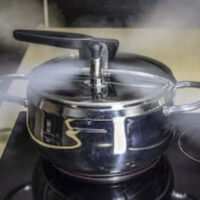
When a pressure cooker allegedly opens while still under pressure, scalding-hot contents can cause serious injuries, and Illinois product liability law may provide a basis for a claim.
Pressure cookers are designed to contain extremely hot food, liquid, steam, and pressure. A May 2023 lawsuit against Tristar Products, Inc. alleged that a Power Pressure Cooker had safety problems that allowed its lid to be removed while pressure, heat, and steam remained inside the appliance. The complaint alleged that the resulting release of scalding contents caused serious burn injuries to a four-year-old child and the child’s mother. Those allegations were claims made in the lawsuit and were not a judicial finding that Tristar was liable. [PR Newswire]
Why These Cases Matter
A pressure cooker that allegedly releases its contents while still under pressure raises several potential product liability questions. Was the product defectively designed? Was a particular unit manufactured incorrectly? Did the manufacturer provide adequate warnings and instructions? And did the alleged defect actually cause the injury? The answers depend on the evidence in the individual case.
What Happened in the Tristar Pressure Cooker Lawsuit?
In May 2023, a lawsuit was filed in federal court in the Northern District of Florida on behalf of a four-year-old child and the child’s mother. The complaint identified the child as a minor and alleged that a Tristar Power Pressure Cooker was defective. According to the complaint, the pressure cooker was equipped with built-in safety devices intended to protect users, including a lid safety device.
The lawsuit alleged that the pressure cooker’s lid could nevertheless be rotated and removed while pressure, heat, and steam remained inside the unit. The plaintiffs alleged that this allowed scalding-hot contents to be forcefully ejected from the appliance and caused serious burn injuries.
The complaint also alleged that Tristar failed to adequately warn consumers about the alleged danger, failed to redesign the pressure cooker despite safer alternative designs, and failed to recall the affected products.
Allegations Are Not Findings of Liability
The Tristar case is useful for explaining the kinds of allegations that can appear in a pressure cooker product liability lawsuit. It should not be read as a determination that the pressure cooker was defective or that Tristar was legally responsible for the injuries. Those issues would have to be established through the legal process.
How Can a Pressure Cooker Cause a Severe Burn Injury?
Pressure cookers operate by trapping steam inside a sealed vessel. This allows pressure and temperature to rise so that food can cook more quickly. Because the contents may be extremely hot, an unsafe release of pressure can expose people nearby to steam, boiling liquids, or hot food.
A product liability claim can arise when the mechanism intended to prevent an unsafe release allegedly fails or when the product has another condition that makes it unreasonably dangerous during reasonably anticipated use.
Pressure
The appliance contains pressure while operating.
Safety Mechanism
Safety features are intended to prevent an unsafe opening or release of pressure.
Unsafe Release
If a safety mechanism allegedly fails, pressurized contents may escape unexpectedly.
Burn Injury
Hot liquids, food, or steam may cause serious thermal injuries.
What Is Product Liability in Illinois?
Product liability refers to civil claims arising from harm allegedly caused by a product. Illinois law recognizes product liability claims based on theories including defective design, defective manufacture, and inadequate warnings or instructions.
Illinois courts generally require a plaintiff pursuing strict product liability based on a product defect to establish that the product had a condition resulting from its manufacture or design, that the condition made the product unreasonably dangerous, that the condition existed when the product left the defendant’s control, and that the condition proximately caused the plaintiff’s injury. [Illinois Pattern Jury Instructions]
Strict Liability Does Not Mean Automatic Liability
Calling a claim “strict product liability” does not mean a manufacturer automatically owes damages whenever its product injures someone. The plaintiff still must prove the required elements of the particular claim, including an unreasonably dangerous condition and a causal connection between that condition and the injury.
Three Common Product Defect Theories
Design Defect
A plaintiff may argue that the product’s design itself was unreasonably dangerous and that a safer practical alternative design was available.
Manufacturing Defect
A plaintiff may allege that the particular pressure cooker departed from its intended design because something went wrong during manufacturing or assembly.
Failure to Warn
A plaintiff may allege that the manufacturer failed to provide adequate warnings or instructions concerning a material risk associated with a reasonably anticipated use.
What Is a Design Defect?
A design defect claim alleges that the product was dangerous because of the way it was designed before it reached consumers.
In a pressure cooker case, evidence could concern the design of the lid, pressure-release system, locking mechanism, or other safety components. A plaintiff might argue that an alternative design could have reduced the risk of an unexpected release while preserving the useful function of the appliance.
The Tristar complaint specifically alleged that safer alternative designs existed and that the company should have redesigned the pressure cooker. That was an allegation made by the plaintiffs rather than an established fact.
What Evidence Could Matter?
Product engineering records, design documents, testing materials, prior incident reports, expert inspections, comparable products, and evidence concerning alternative designs can potentially become important in a design-defect case.
What Is a Manufacturing Defect?
A manufacturing defect is different from a design defect. The basic design may be considered safe, but a particular unit may be defective because it did not conform to the intended design when it left the manufacturer’s control.
For example, a particular pressure cooker could potentially have a defective locking mechanism, improperly installed component, damaged pressure-release device, or other assembly problem that is different from the product’s intended design.
A plaintiff pursuing this type of claim would need evidence connecting the alleged manufacturing problem to the injury.
Can Failure to Warn Support a Product Liability Claim?
Yes. A product liability lawsuit can also allege that the manufacturer failed to adequately warn or instruct consumers about a material risk associated with a reasonably anticipated use of the product.
Illinois law addresses warnings and instructions in product liability actions. Among other things, Illinois law provides rules concerning the adequacy of warnings and recognizes circumstances in which a defendant may not be liable for a warning-related claim when the relevant danger was not reasonably knowable at the time the product left the manufacturer’s control. [735 ILCS 5/2-2106]
Warning Issues Can Be Fact-Specific
A warning case can involve questions about what risk existed, whether the manufacturer knew or reasonably should have known about that risk, whether the warning adequately communicated the danger, and whether an adequate warning would have changed the user’s conduct.
What About a Pressure Cooker Recall?
The Tristar complaint alleged that the company failed to recall the pressure cookers despite allegedly knowing about the danger. Whether a manufacturer should have recalled a product can raise questions about the manufacturer’s knowledge of prior incidents, regulatory communications, consumer complaints, testing results, and the nature of the alleged defect.
A recall allegation, however, does not by itself establish that a manufacturer is liable for an individual injury. The plaintiff still must establish the legal elements of the underlying product liability claim and connect the alleged defect or failure to warn to the injury.
Why Recall Evidence May Matter
Prior consumer complaints, incident reports, regulatory communications, internal testing, engineering documents, and other evidence may help establish what a manufacturer knew about an alleged defect and when it knew it. The significance and admissibility of that evidence depend on the specific facts and applicable law.
What Should You Do After a Pressure Cooker Burn Injury?
A pressure cooker injury can involve more than ordinary burn treatment. If the injury may have resulted from a product defect, preserving evidence can become important because the condition of the appliance may later need to be examined by engineers or other experts.
Preserve the Product
Do not discard or intentionally alter the pressure cooker or its components if a product defect may be involved.
Preserve Documentation
Keep photographs, receipts, packaging, manuals, warning labels, medical records, and other materials connected to the incident.
Document the Injury
Medical documentation can help establish the nature and extent of the burns and other injuries.
Investigate the Product
A product liability attorney may need to investigate the model, design, manufacturing history, warnings, prior incidents, and potential alternative designs.
What Damages Can Be Available After a Defective Product Injury?
Depending on the facts and applicable Illinois law, a person injured by a defective product may be able to seek compensation for losses resulting from the injury. Potential damages can include medical expenses, lost income, pain and suffering, disfigurement, disability, and other legally recoverable losses.
When a child suffers a serious burn injury, the consequences can also include extensive medical treatment, rehabilitation, scarring or disfigurement, and long-term effects on the child’s daily life. The appropriate damages depend on the evidence and the individual circumstances of the injury.
The Extent of the Injury Matters
Serious burn injuries can require emergency care, surgery, wound treatment, rehabilitation, and continuing medical care. A product liability claim should account for both the immediate consequences of the injury and the longer-term effects when supported by the evidence.
Why Product Liability Cases Can Be Complicated
Product liability cases can involve manufacturers, distributors, sellers, engineers, testing companies, insurers, and other parties. Establishing liability may require evidence that is not available to the injured person without formal investigation and discovery.
Expert testimony may also be necessary to determine whether a product’s design or manufacture created an unreasonable danger, whether a safer alternative design existed, whether a warning was adequate, and whether the alleged defect caused the injury.
Product Evidence
The actual product and its components may need to be preserved and examined.
Expert Analysis
Engineers and other experts may be needed to evaluate the alleged defect.
Manufacturer Records
Testing, engineering, complaint, warning, and design records may become relevant.
Causation
The evidence must ultimately connect the alleged product defect to the injury.
Talk to a Champaign, IL Product Liability Lawyer
If you or your child suffered serious burn injuries because of a pressure cooker or another allegedly defective product, you may have a product liability claim. The specific legal theory may depend on whether the problem involved the product’s design, manufacturing, warnings, instructions, or another defect.
Patel Law, PC represents people injured by defective products and other dangerous conditions in Illinois. Our Champaign personal injury lawyers can review the circumstances of the injury, the product involved, and the evidence available to determine what legal options may be available.
Injured by a Defective Product?
Talk with a Champaign personal injury lawyer about your product liability claim.
Sources
- Johnson//Becker / PR Newswire — Tristar Pressure Cooker Lawsuit
- Complaint — C.T.J., a minor, by and through his mother, v. Tristar Products, Inc.
- Illinois Pattern Jury Instructions — Strict Product Liability
- 735 ILCS 5/2-2106 — Product Warnings and Instructions
- 735 ILCS 5/13-213 — Product Liability Statute of Repose
