
Patient Dies After Catheter Pump is Found to Have Holes in It
The Illinois Supreme Court examined how much evidence is required before a medical malpractice plaintiff can add a respondent in discovery as a defendant in a wrongful death lawsuit.
In Cleeton v. SIU Healthcare, Inc., the Illinois Supreme Court considered a wrongful death case involving a patient who suffered from baclofen withdrawal syndrome after complications involving an implanted medication pump. The plaintiff’s estate alleged that several healthcare providers failed to recognize and timely treat the patient’s condition. The specific issue before the Supreme Court, however, was not whether any defendant was ultimately liable for medical malpractice. Instead, the Court considered whether there was enough evidence to convert Dr. Mouhamad Bakir from a respondent in discovery into a defendant under Illinois law.
Case: Cleeton v. SIU Healthcare, Inc., 2023 IL 128651
Court: Illinois Supreme Court
Decision: May 18, 2023
Result: The Supreme Court reversed the lower courts and remanded the case for further proceedings.
What Happened to Donald Cleeton?
Donald Cleeton suffered a cervical spinal cord injury when he was 17 years old, leaving him quadriplegic. He experienced involuntary muscle spasms as a result of the injury and was treated with an implanted Medtronic SynchroMed II infusion system that delivered baclofen directly into the intrathecal space around his spine.
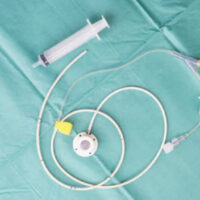
The device consisted of a programmable pump and a catheter. The pump held and dispensed the baclofen, while the catheter delivered the medication into the spinal area. The device was managed by the Southern Illinois University Department of Neurology and required regular refills.
The Pump
The implanted pump stored and delivered doses of baclofen.
The Catheter
The catheter delivered baclofen from the pump into the intrathecal space of the spine.
Regular Refills
Because Donald relied on the medication, the pump required routine refills and monitoring.
The Pump Refill and Emergency Room Visit
On October 25, 2017, Donald and his mother, Carol, went to the SIU Neurology clinic for a routine pump refill. Charlene Young, a family nurse practitioner, and Ashley Kochman, a registered nurse, attempted to refill the pump. Several attempts were made before Young successfully completed a refill.
One of Kochman’s attempts involved inserting the full length of the refill needle into Donald’s abdomen without making contact with the pump.
Four days later, on October 29, Donald went to Memorial Medical Center’s emergency department complaining of a headache, abdominal pain, and increased muscle spasms. He also reported that he had recently suffered from a urinary tract infection.
The Pump Initially Appeared to Be Functioning
Doctors had a Medtronic representative interrogate the pump. The interrogation indicated that the pump was functioning properly and delivering the correct dosage. This became important because the medical team was considering more than one possible explanation for Donald’s symptoms.
Baclofen Withdrawal Syndrome Became Part of the Differential Diagnosis
By October 30, Donald had been transferred to the intensive care unit. Physicians were evaluating his symptoms, including tachycardia, altered mental status, and possible seizures.
Neurologist Dr. Abdullah Al Sawaf documented a differential diagnosis of mild-to-moderate baclofen withdrawal syndrome versus sepsis. His notes stated that Donald’s normal muscle tone weighed against baclofen withdrawal, while the timing of the symptoms and autonomic dysfunction supported the possibility.
The medical record also reflected that the physicians involved were considering other possible medical conditions. Dr. Al Sawaf and Dr. Bakir expressed a lack of familiarity with baclofen withdrawal syndrome, according to the record described by the Supreme Court.
Baclofen Withdrawal
Doctors considered baclofen withdrawal as one possible explanation for Donald’s condition.
Sepsis
Sepsis associated with a urinary infection was another possible explanation for the patient’s symptoms.
Pump Function
Testing indicated that the pump itself appeared to be functioning correctly, although later testing revealed holes in the catheter.
Donald’s Condition Deteriorated
At approximately 12:07 p.m. on October 30, a code blue was called after Donald lost his pulse. Dr. Jose Espinosa recommended that baclofen be administered intrathecally. The medication was given during the resuscitation efforts, but Donald was pronounced dead at 3:06 p.m.
Later testing revealed that the catheter for Donald’s implanted pump contained holes.
Important Case Distinction
The Illinois Supreme Court did not decide that the pump refill caused Donald’s death or that any particular healthcare provider committed malpractice. Those were factual and liability questions for further proceedings. The Supreme Court’s decision addressed whether the evidence was sufficient to permit the wrongful death case to proceed against Dr. Bakir as a defendant.
Carol Cleeton Filed a Wrongful Death Lawsuit
In February 2019, Carol Cleeton, as independent administrator of Donald’s estate, filed a wrongful death action against SIU Healthcare, Inc., Charlene Young, and Dr. Al Sawaf. Other individuals and entities were named as respondents in discovery, including Memorial Medical Center, Dr. Richard Austin, Dr. Todd Knox, Dr. Mouhamad Bakir, Medtronic, and other medical professionals and employees.
The purpose of identifying people as respondents in discovery is to allow a plaintiff to investigate information that may be necessary to determine who should properly be named as an additional defendant.
Respondent in Discovery vs. Defendant
Respondent in Discovery
A person or entity identified because they may have information essential to determining who should properly be named as an additional defendant.
Defendant
A party formally subject to the plaintiff’s claim for relief.
Why Did the Plaintiff Want to Add Dr. Bakir as a Defendant?
Carol sought to convert Dr. Bakir from a respondent in discovery into a defendant under 735 ILCS 5/2-402.
To support the request, Carol submitted a certificate of merit from Dr. William Stephen Minore. Dr. Minore stated that, within a reasonable degree of medical certainty, Dr. Bakir had deviated from the applicable standard of care by failing to timely recognize baclofen withdrawal syndrome, failing to order appropriate treatment, and failing to ensure that intrathecal baclofen was administered in a timely manner.
What the Medical Expert Actually Offered
Dr. Minore’s opinion was enough, at this procedural stage, to support an honest and strong suspicion that Dr. Bakir may have breached the standard of care and that his conduct may have proximately caused the plaintiff’s injuries. The Supreme Court emphasized that this was not a final determination of malpractice liability.
What Is the Standard for Converting a Respondent in Discovery?
Section 2-402 of the Illinois Code of Civil Procedure allows a respondent in discovery to be added as a defendant when the evidence discloses probable cause for doing so.
The Illinois Supreme Court explained that the probable-cause standard at this stage is relatively low. The court is not deciding whether the physician is ultimately liable, nor is it determining whether the plaintiff has already proved a medical malpractice claim. Instead, the court considers whether the evidence creates an honest and strong suspicion that the respondent’s alleged negligence was a proximate cause of the plaintiff’s injury.
Evidence
The plaintiff presents pleadings and documentary evidence supporting the proposed claim.
Probable Cause
The evidence must create an honest and strong suspicion that the alleged negligence may support liability.
Further Litigation
The merits of the malpractice claim can then be decided through the ordinary fact-finding process.
Why Did the Lower Courts Reject the Plaintiff’s Motion?
The Sangamon County circuit court denied Carol’s motion to convert Dr. Bakir and terminated his status as a respondent in discovery. The circuit court reasoned, among other things, that the Medtronic emergency procedure documents did not establish the standard of care applicable to Dr. Bakir and that the evidence did not provide a reasonable and meritorious basis for the proposed medical malpractice claim.
The Fourth District Appellate Court affirmed. It concluded that Dr. Minore’s certificate of merit identified a deviation from the standard of care but did not sufficiently establish the proper standard by which Dr. Bakir’s conduct should be measured.
The Supreme Court Took a Different Approach
The Supreme Court held that the lower courts required too much evidence at the respondent-in-discovery stage. The plaintiff did not need to prove the malpractice claim at that point. She needed to present sufficient evidence to establish probable cause to continue the action against Dr. Bakir.
What Did the Illinois Supreme Court Decide?
The Illinois Supreme Court reversed both the circuit court and appellate court decisions and remanded the case for further proceedings.
The Court held that the plaintiff’s pleadings and documentary evidence were legally sufficient to establish probable cause under section 2-402. The Court emphasized that Dr. Minore’s certificate stated, within a reasonable degree of medical certainty, that Dr. Bakir failed to timely recognize baclofen withdrawal syndrome, failed to order appropriate treatment, and failed to ensure timely administration of intrathecal baclofen.
The Supreme Court explained that whether those alleged failures actually constituted a deviation from the applicable standard of care—and whether they actually caused Donald’s death—were questions for the trier of fact. Those issues had not been decided by the Court.
The Court held that enough evidence existed to convert Dr. Bakir from a respondent in discovery to a defendant.
What Does Cleeton Mean for Illinois Medical Malpractice Cases?
Cleeton is important because it clarifies that a plaintiff does not have to prove the entire medical malpractice case merely to convert a respondent in discovery into a defendant under section 2-402.
At that stage, the question is whether the available evidence creates probable cause to proceed. The Illinois Supreme Court described this as a relatively low threshold that should be liberally construed so that cases can ultimately be resolved according to the parties’ substantive rights.
That does not mean every medical professional named as a respondent in discovery must automatically become a defendant. The plaintiff still must present evidence supporting probable cause. But the plaintiff does not have to establish the ultimate merits of the malpractice claim at this preliminary stage.
A Procedural Decision, Not a Final Malpractice Finding
The Supreme Court’s decision allowed the case to proceed against Dr. Bakir. It did not determine that Dr. Bakir committed malpractice or that his conduct caused Donald’s death. Those questions remained for further proceedings and fact-finding.
Medical Malpractice Claims Require Careful Investigation
A medical malpractice case can involve several healthcare providers, facilities, medical-device manufacturers, and other parties. Determining which parties may be legally responsible can require reviewing medical records, treatment timelines, expert opinions, device records, diagnostic testing, and other evidence.
In Illinois medical malpractice cases, expert medical evidence can also be critical. Section 2-622 of the Illinois Code of Civil Procedure generally requires a plaintiff bringing a healing-art malpractice action to file the required affidavit and supporting medical report establishing a reasonable and meritorious basis for the action, subject to the statute’s specific requirements and exceptions.
Medical Records
Treatment records can help reconstruct what providers knew and when they knew it.
Expert Review
Qualified healthcare professionals may be needed to evaluate the applicable standard of care.
Causation
Evidence must ultimately connect the alleged medical negligence to the patient’s injury or death.
Procedural Requirements
Illinois law contains specific procedural requirements for medical malpractice actions.
Talk to a Decatur Personal Injury Lawyer
Medical malpractice and wrongful death cases can involve complex medical records, multiple healthcare providers, medical devices, expert opinions, and questions about causation. Determining whether a healthcare provider may be responsible requires a careful review of the specific facts and applicable medical standards.
Patel Law, PC represents people and families pursuing personal injury and wrongful death claims in Illinois. Our Decatur personal injury lawyers can review the circumstances surrounding an injury or death and discuss the potential legal options.
Injured Because of Possible Medical Negligence?
Talk with a Decatur personal injury lawyer about the circumstances of your case.
Sources
